
Why a Walkable Main Street Changes the Way You Live
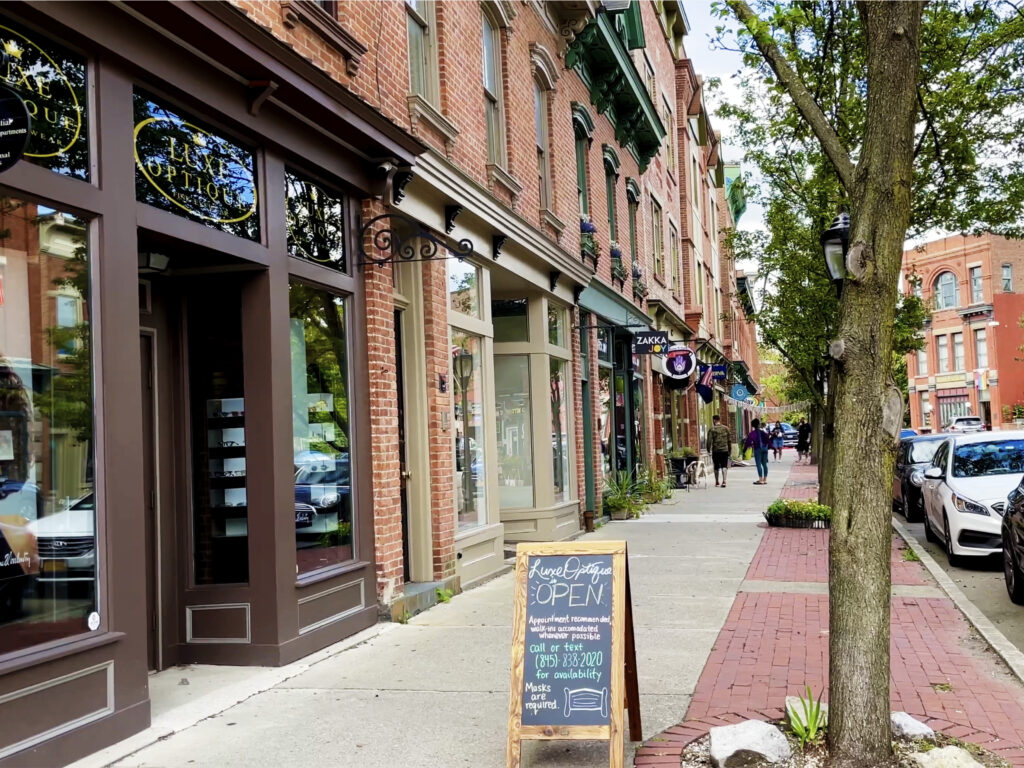
A walkable main street turns errands into encounters. It makes coffee feel like a small outing, gives teenagers and guests some independence, and creates the simple pleasure of being able to say, “let’s walk over,” instead of checking parking and traffic first.
It’s easy to underrate how much that changes daily life until you’ve lived both ways. A five-minute walk to pick up dinner is a different experience than a ten-minute drive for the same errand, even though the time difference is small. One is a chore. The other is a small piece of your day you’d choose again.
What actually makes a main street work
Not every village with a pretty photo backdrop functions the way you’d want day to day. The real test isn’t how a main street looks on a fall weekend when everyone’s out for foliage. It’s whether it works on a random Tuesday in February when you need milk, a prescription, and maybe a coffee before a 9am call.
A main street that earns the term usually has a working grocery option, or at least a market, within walking distance, not just gift shops and tasting rooms. It has sidewalks that are actually maintained in winter, not just installed for the summer crowd. It has a mix of restaurants that aren’t all the same price point, so a Tuesday dinner and a special-occasion dinner don’t require driving to two different towns. And it has enough foot traffic that businesses can stay open through the slow months, which is often the real signal of whether a downtown is a lifestyle amenity or a seasonal stage set.
A few Hudson Valley towns do this well, each in a different way. Beacon’s Main Street runs nearly a mile of shops, galleries, and restaurants, with the Metro-North station and the Hudson River waterfront both within an easy walk, which makes it work for commuters and weekend regulars alike. Cold Spring packs antique shops, restaurants, and river access into a compact, walkable core, small enough that you can cover it on foot in twenty minutes but dense enough that you’ll find a reason to. Rhinebeck’s village center mixes independent shops and long-standing restaurants with a genuinely useful hardware store and pharmacy, the kind of everyday businesses that keep a downtown functional rather than purely decorative. Millbrook and Warwick both offer a quieter, smaller-scale version of the same idea: a compact center you can walk to for the basics, without the crowds that come with being a well-known day-trip destination.
Make it part of the rhythm
The Hudson Valley lifestyle isn’t a weekend performance. Its real appeal is that small pleasures can become routine: places you return to, landscapes you notice in different light, rituals that make home feel more deeply yours. A walkable main street is one of the clearest examples of this. It’s not something you plan around. It’s something that quietly reduces the friction in an ordinary week, one short walk at a time.
Three ways to enjoy it
Look beyond the postcard. Visit at different times and notice what’s actually useful: grocery options, restaurants, parks, sidewalks, parking, transit access, and the kinds of everyday businesses that make routine life easier. A town that photographs beautifully in October can feel very different on a gray Tuesday in March. Go on an ordinary day before you fall for it on an extraordinary one.
Consider the social rhythm. Walkability tends to mean more spontaneous connection: running into a neighbor at the coffee shop, knowing the person behind the counter at the market, catching a local event you weren’t specifically looking for. That’s an asset for some households and a real tradeoff for others. If you value anonymity and quiet more than familiarity, a busier village center might wear on you rather than delight you.
Balance access with privacy. A home near town can reduce driving and increase convenience, but it also usually means less land, closer neighbors, and more foot and car traffic near the property. A home just beyond the center often offers more quiet and privacy with only a short walk or a five-minute drive back into the action. Neither is automatically the better choice. It depends on which tradeoff fits how you actually want to live.
What to check before you assume a town is walkable
A few practical things are worth verifying before you count on walkability as a selling point of a specific address. Distance on a map isn’t the same as distance on foot: a half mile that includes a hill, a busy road crossing without a light, or a stretch with no sidewalk will feel much longer than a flat half mile through a village center. Check whether the routes you’d actually use, to the train station, the grocery store, a school, have real sidewalks the whole way, not just near the commercial strip. And if winter matters to you, ask how quickly the town clears sidewalks after snow. Some villages are diligent about it. Others leave it to individual property owners, which means the walk that works in July may not work in January.
A thoughtful next move
The right main street doesn’t need to be busy every minute. It needs to make ordinary life feel a little more connected, on the Tuesdays as much as the Saturdays.
Explore the Hudson Valley with intention. For a home search shaped around the way you want to live, not just a list of rooms, connect with Jeffrey Hoffmann for a tailored local strategy.
Frequently asked questions
Which Hudson Valley towns are walkable? Beacon, Cold Spring, Rhinebeck, Millbrook, and Warwick are among the more genuinely walkable village centers in the region, each with a different feel and scale. The best approach is to visit a few in person, on an ordinary weekday rather than a peak weekend, and see which one matches how you’d actually use it.
What should I look for in a walkable neighborhood? Look past the shops and restaurants to the basics: a real grocery option or market, maintained sidewalks that hold up in winter, and enough everyday businesses (a pharmacy, a hardware store, a bank) that the town functions year-round rather than just during tourist season. Also check actual walking routes for hills, busy road crossings, and sidewalk gaps, since map distance doesn’t always match walking distance.
Is living near a village center worth it? It depends on what you’re trading for it. Proximity to town usually means less driving, more spontaneous errands, and a stronger sense of connection to daily local life, but often with less land and more nearby activity than a property further out. Choose one or two places or rituals that match your interests, then spend time in a town at different hours and seasons before deciding it’s the right fit for how you want to live.