
The Hudson Valley Kitchen: Why Gathering Space Matters More Than Square Footage
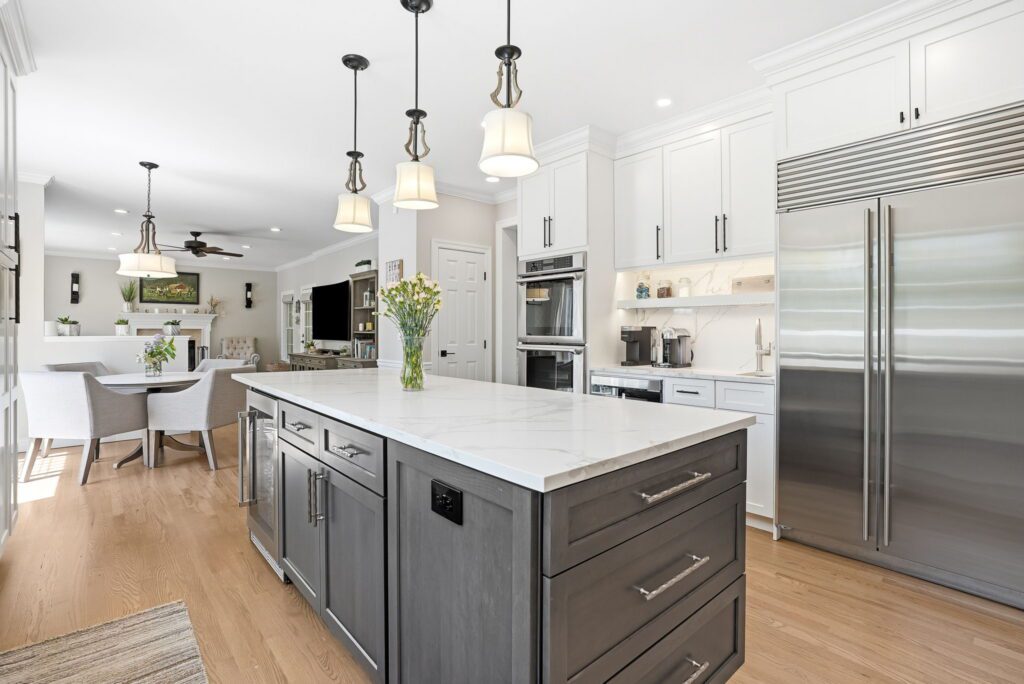
The kitchen is often described as the heart of a home. That phrase has been used so often it deserves a small vacation. Still, the idea endures because kitchens are where weekday logistics and weekend generosity tend to collide: the same counter that holds a lunchbox assembly line at 7am is holding a cutting board and two glasses of wine by 7pm on Saturday.
Buyers walk into a kitchen and register square footage first, because it’s the easiest thing to measure. But square footage rarely predicts whether a kitchen actually works. A large kitchen with an awkward layout can feel worse to cook and gather in than a modest one that’s arranged well. The room’s real job isn’t to be big. It’s to hold a group of people comfortably while someone’s cooking, without anyone feeling like they’re in the way.
Why flow beats size
Kitchen designers have talked about the “work triangle,” the rough distance between the sink, stove, and refrigerator, for decades, and it still holds up as a quick gut check. If those three points are spread too far apart, or if a walkway cuts straight through the middle of them, cooking becomes a series of detours even in a spacious room. A tighter, well-arranged kitchen often outperforms a bigger one simply because nobody’s crossing paths with the person at the stove.
The same logic extends to gathering. A kitchen island or peninsula that gives people somewhere to sit without being in the cook’s direct path is worth more than extra square feet of open floor. So is enough counter space near the stove to actually land a hot pan, which sounds minor until you’re hosting eight people and realize there’s nowhere to put anything down.
Make it part of the rhythm
The Hudson Valley lifestyle isn’t a weekend performance. Its real appeal is that small pleasures can become routine: places you return to, landscapes you notice in different light, rituals that make home feel more deeply yours. A kitchen that works well earns that kind of daily use. It’s the room people migrate to without being asked, the one where a fifteen-minute “just stopping by” turns into an hour because nobody wanted to leave the counter.
Three ways to enjoy it
Focus on flow rather than size. A kitchen that supports cooking, conversation, and easy movement can feel more generous than a larger room with a complicated layout. Walk through the room mentally: where would you stand while cooking, where would guests naturally gather, and do those two zones overlap in a way that would drive you a little crazy after the tenth dinner party.
Notice the relationship to the outdoors. A door to a patio, garden, porch, or grill area can make hosting feel natural in every season, not just July. In the Hudson Valley, where outdoor entertaining stretches from a spring farmers-market lunch through a fall evening around a fire, a kitchen with real indoor-outdoor flow gets used far more months of the year than one that’s sealed off from the yard.
Keep function in the picture. Storage, lighting, work surfaces, ventilation, and appliance condition matter because the kitchen is asked to perform long after the open-house cookies are gone. A beautiful kitchen with poor task lighting or a range hood that doesn’t actually vent outside will announce itself the first time you’re searing something on a Tuesday night.
What to actually check when you’re touring
A few practical things are easy to miss when a kitchen is staged well. Open every cabinet and drawer, since storage capacity matters more day to day than most finishes do, and older Hudson Valley homes in particular can have kitchens that were updated cosmetically without addressing genuinely limited storage. Stand at the stove and turn around: is there a clear, close place to set down a hot pan, and can two people comfortably occupy the space at once. Check the lighting plan, not just the fixture style, since a kitchen that’s gorgeous at noon can be genuinely hard to cook in after dark if task lighting was an afterthought. And ask about the age of major appliances and the range hood’s actual ventilation, whether it vents outside or just recirculates, since that affects both function and future replacement cost.
If entertaining matters to you, also think seasonally. Many older Hudson Valley homes have a mudroom or back entry near the kitchen that was built for exactly this climate: boots, coats, and firewood coming in without tracking through the whole house. That’s a small detail that quietly shapes how much a kitchen gets used for gathering once the weather turns.
A thoughtful next move
The most memorable kitchens aren’t always the newest. They’re the ones where people naturally gather, linger, and offer to help, usually after being told they don’t have to.
Explore the Hudson Valley with intention. For a home search shaped around the way you want to live, not just a list of rooms, connect with Jeffrey Hoffmann for a tailored local strategy.
Frequently asked questions
What makes a kitchen good for entertaining? Layout matters more than size. Look for enough counter space near the cooking area, seating that doesn’t block the cook’s path, and a natural connection to an outdoor space if you entertain seasonally. A kitchen that lets a few people help without crowding the person cooking tends to get used for gatherings far more than one that just looks impressive.
How do I evaluate a kitchen when buying a home? Walk through it as though you’re actually cooking a meal there, not just admiring the finishes. Check the distance between the sink, stove, and refrigerator, open the cabinets and drawers to gauge real storage, check the lighting at counter height, and ask about the age of major appliances and whether the range hood vents outside. These details tell you more about daily livability than the countertop material will.
Does an open kitchen add value? Open layouts are broadly popular with buyers right now and can support resale value, particularly for entertaining-focused households. That said, value depends on execution: an open kitchen with poor flow or inadequate storage can underperform a well-designed closed or semi-open layout. It’s worth weighing your own cooking and hosting habits against the layout rather than assuming “open” is automatically the better choice for your situation.