
How to Create a Home Library That Feels Collected, Not Staged
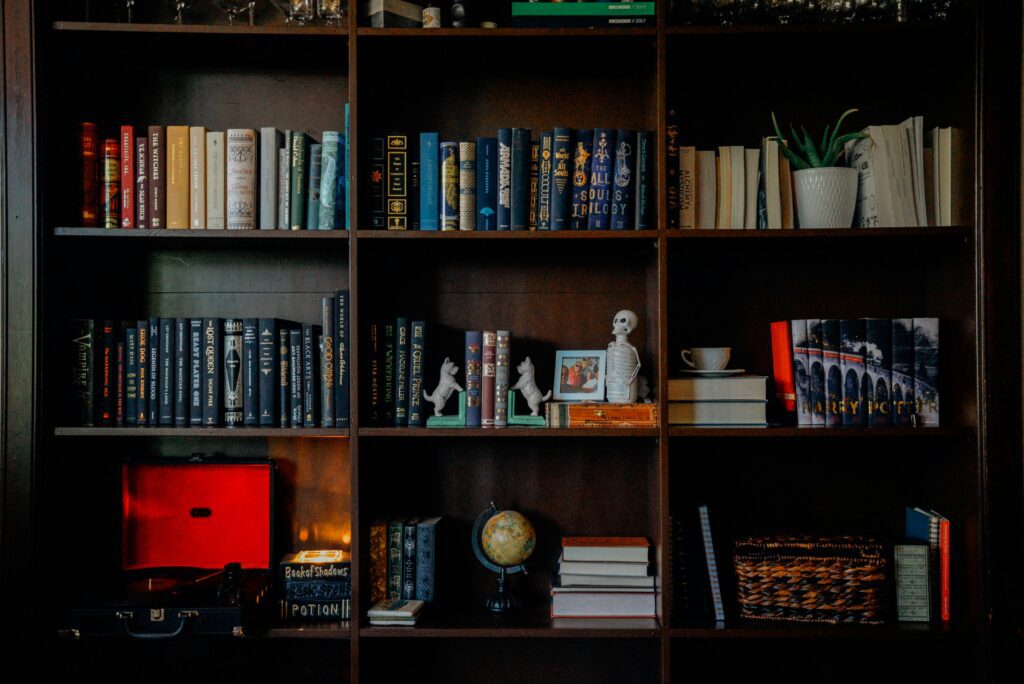
A home library isn’t defined by a ladder, a fireplace, or a suspiciously perfect row of hardcover novels. It’s defined by use: a place where books are easy to reach, light is kind in the evening, and the room feels more inviting because it holds evidence of curiosity instead of a decorator’s idea of it.
You’ve probably seen the other kind. Books arranged by spine color, or bought by the yard to fill a shelf, none of them cracked open. It looks nice in a photo and says nothing about the person who lives there. A real library does the opposite. It tells you what someone reads at 11pm, what they gave up on halfway through, what they’ve read three times.
What actually makes it feel collected
Collected libraries have some mess in them, and that’s not a flaw to fix. A stack of books on the floor next to the chair because the shelf filled up. A paperback with a coffee ring on the cover. Bookends that don’t match because one came from a flea market in Rhinebeck and the other was your grandmother’s. A library card sleeve still glued inside a used hardcover. These details are what separate a room that’s lived in from one that’s been arranged to look that way.
The staged version, by contrast, tends to have a few tells: uniform spine heights, books turned so the titles don’t face out, and nothing on the shelf that isn’t a book, a candle, or a single “curated” object. If every shelf looks intentional in the same way, it stops looking like anyone’s.
Make it part of the rhythm
The Hudson Valley lifestyle isn’t a weekend performance. Its real appeal is that small pleasures can become routine: places you return to, landscapes you notice in different light, rituals that make home feel more deeply yours. A library fits that pattern better than almost any other room. It’s not a space for entertaining. It’s a space you return to on an ordinary Tuesday night because the chair is good and the light is low enough to be restful.
Older Hudson Valley homes tend to help with this without much effort. Deep windowsills, built-in shelving from a previous era, a den or parlor that never quite settled into a defined use. Those rooms are already halfway to being a library. They just need someone to stop treating them like overflow storage.
Getting the practical parts right
Lighting matters more than shelving. A single overhead fixture makes a library feel like a waiting room. A reading lamp at shoulder height, warm rather than cool bulbs, and enough light to read without eye strain by 9pm will do more for the room than any amount of shelf styling.
Shelving should fit the space, not the other way around. Built-ins make sense in an older home with the wall space to support them, but a simple bookcase, even a mismatched pair from different years, works fine if the books inside it are actually yours. Leave a little room on each shelf. A shelf packed floor to ceiling is hard to browse and harder to add to.
Think about weight and access. Books you reach for often, the ones half-read on the nightstand rotation, belong at eye level or lower. The books you’re keeping for sentiment or someday can go higher up. This isn’t about hierarchy. It’s about not needing a step stool for the book you want on a Tuesday night.
Three ways to enjoy it
Start with what you already read. Group books in ways that make sense to you: by subject, by author, by color if you’re willing to accept a little side-eye from the serious readers in your life, or simply by what fits where. There’s no correct system. There’s only the one you’ll actually maintain.
Add one comfortable seat and one useful surface. Reading corners work when they support the small rituals: a lamp, a drink, a bookmark, a notebook, and nothing that needs to be balanced on your knee. A side table matters more than a second chair.
Let the room stay personal. Art, family photographs, collected objects, and a few imperfect stacks are what keep a library from looking like a showroom. If every object in the room could be swapped out without anyone noticing, it isn’t a library yet. It’s a display.
A thoughtful next move
In the Hudson Valley, where older homes and long winters can make interior spaces especially meaningful, a library isn’t a luxury room. It’s a permission slip to slow down, and one of the rooms people underestimate most when they’re house hunting. A good reading room rarely shows up on a listing sheet, but it’s often the room that makes a house feel like it fits.
Explore the Hudson Valley with intention. For a home search shaped around the way you want to live, not just a list of rooms, connect with Jeffrey Hoffmann for a tailored local strategy.
Frequently asked questions
How do I design a home library? Start with the books you actually own and read, not an aspirational collection. Pick a lighting setup that works after dark, since most reading happens in the evening, and give the space one genuinely comfortable seat before worrying about anything else. The shelving and styling can follow once the room is being used.
What makes a reading nook comfortable? Good light at the right height, a chair that supports a real reading session rather than a five-minute sit, and a surface within reach for a drink or a bookmark. Comfort here is mostly about not having to get up. If you find yourself relocating to the couch after ten minutes, something in the setup isn’t working.
Can I create a library in a small room? Yes, and small rooms are often better for it. A single wall of shelving, one chair, and one lamp is enough. A deep windowsill, a stair landing, or a corner of a bedroom can all hold a working reading spot. The room doesn’t need floor space to spare. It needs a reason to sit down.