
A Hudson Valley Guide to Hosting Houseguests Without Turning Into a Bed-and-Breakfast
One of the quiet pleasures of owning a Hudson Valley home is that, at some point, you become the person people want to visit.
You know the role.
The friend with the guest room.
The extra towels.
The porch.
The better coffee situation.
The alarming number of local recommendations.
The ability to say, “There’s a great farm stand about ten minutes from here,” with just enough confidence to sound like you have become a regional lifestyle authority.
And honestly? It is lovely.
A Hudson Valley home has a way of becoming a gathering place. Friends come up from the city. Family arrives for long weekends. Guests want leaves in October, river towns in spring, pool time in summer, cozy dinners in winter, and some version of “Can we just walk around somewhere cute?”
The answer is usually yes.
But there is a balance.
Hosting should feel generous, not exhausting. Warm, not overproduced. Thoughtful, not like you have accidentally opened a boutique inn with no staff and a highly inconsistent cancellation policy.
The best kind of hosting in the Hudson Valley is not about creating a perfect itinerary or pretending your home is a bed-and-breakfast. It is about giving people a place to exhale, enjoy the region, and feel cared for without turning your own weekend into a full-time hospitality operation.
The real luxury is ease
A good guest weekend does not need to be complicated.
In fact, the most memorable visits are often built around simple pleasures: coffee on the porch, a morning walk, a farm stand stop, a village stroll, a long lunch, a fire pit conversation, a scenic drive, or everyone drifting into the kitchen while dinner comes together.
That is the real appeal of the Hudson Valley.
The lifestyle is not only about destination moments. It is about rhythm. The places you return to. The views that change with the season. The errands that feel like outings. The local spots that become part of your own map.
When guests visit, you are not just showing them the region.
You are inviting them into the version of life you are building here.
That is why the goal is not to overperform.
The goal is to make the weekend feel easy.
Start with a simple guest landing zone
You do not need a fully stocked guest suite with monogrammed robes and a laminated breakfast menu.
Though if you have monogrammed robes, please know I respect the commitment.
What you do need is a clear, comfortable place for guests to land.
A few small details can make a big difference:
Clear surface space for a suitcase, tote bag, or the mysterious pile of items every overnight guest seems to travel with.
A little closet or drawer space, even if it is modest. No one needs an entire dressing room. But a few empty hangers and a cleared shelf can make guests feel expected rather than squeezed in.
Extra towels and basic toiletries placed where they are easy to find. A guest should not have to conduct a linen closet investigation at midnight.
A phone charger or visible outlet near the bed. This small thing prevents the classic guest-room crawl behind furniture.
A water carafe or bottle on the nightstand. Simple, thoughtful, and always appreciated.
A decent reading lamp so the room feels usable at night, not just visually pleasant during the daytime tour.
A note with the Wi-Fi password, because no one wants to ask, and everyone needs it.
The point is not perfection. It is orientation.
Guests feel more relaxed when they know where things are and do not have to ask for every small detail.
Be honest about the coffee situation
Every home has a coffee culture.
Some households are French press people. Some are espresso people. Some have a drip machine, a backup drip machine, and a strong opinion about beans. Some rely on pods. Some operate under the relaxed philosophy of “There is coffee somewhere and Godspeed.”
Whatever your system is, just make it clear.
If guests are early risers, let them know how to make coffee without waking the house. Put mugs, filters, pods, spoons, sweetener, and whatever else they need where they can see them.
This is especially helpful in a Hudson Valley home where mornings can be part of the magic. A quiet cup of coffee with trees outside the window, light coming across the deck, or a village still waking up can be one of the best parts of the stay.
Also, coffee prevents people from asking complicated questions before 8:00 AM.
A public service, really.
Plan one anchor activity, not six
There is a particular hosting trap that happens in places like the Hudson Valley.
Guests arrive, and suddenly you feel responsible for proving the entire region in 48 hours.
A farm market. A hike. A river town. A winery. A historic site. A scenic overlook. A dinner reservation. A charming bookstore. A second charming bookstore, because apparently one was not enough. A bakery. A brewery. A trail. A waterfall. A place with excellent sandwiches.
By Sunday afternoon, everyone is full, tired, and quietly wondering whether the weekend required a waiver.
You do not need to do that.
A better approach is to plan one anchor activity per day.
That might be:
A walk along the river.
A visit to a village main street.
A farm stand or farmers market stop.
A reservation at a favorite restaurant.
A short hike or nature walk.
A scenic drive with one good destination.
A visit to a local shop, bakery, bookstore, or gallery.
A casual lunch somewhere with outdoor seating.
One anchor gives the day shape without turning the visit into a field trip.
Then let the rest of the day breathe.
The Hudson Valley is best enjoyed with room around the edges.
Keep a short list of local favorites
You do not need to become a travel concierge.
But it helps to have a small, personal list of reliable recommendations.
Think in categories:
Coffee: Where would you send someone for a good latte, pastry, or quiet morning?
Breakfast or brunch: What is easy, local, and worth the drive?
Lunch: Where can people go without needing a major reservation strategy?
Dinner: What feels special but not overly complicated?
Farm stands and markets: Which places are easy to explain and enjoyable for visitors?
Walks and views: Where can guests stretch their legs without needing hiking boots, bug spray, and a heroic personality?
Rainy-day ideas: Bookstores, galleries, shops, cafés, museums, antiques, or scenic drives.
Kid-friendly options: Parks, easy trails, ice cream, farms, playgrounds, casual food.
Dog-friendly options: Walks, patios, parks, and places where bringing the dog is realistic rather than optimistic.
The best recommendations are not always the most famous ones. They are the places you actually like and would go yourself.
That is what makes the visit feel personal.
Give guests options, not assignments
There is a difference between suggesting and scheduling.
One feels generous. The other can feel like being enrolled in a weekend seminar called The Hudson Valley According to Me.
Instead of saying, “Tomorrow we are doing the market, then the hike, then lunch, then the scenic drive, then dinner,” try giving two or three options.
For example:
“We could keep it easy and go into town for coffee and shops, or we could do a short walk by the river and then grab lunch.”
That gives guests agency.
It also gives you permission not to manage every minute.
People enjoy a visit more when they feel included in the rhythm rather than processed through an agenda.
Prepare the house, but do not stage your life
This is an important distinction.
Preparing for guests is thoughtful.
Staging your life is exhausting.
Your home does not need to look like no one lives there. It simply needs to feel clean, comfortable, and reasonably navigable.
Focus on the areas guests actually use: entry, guest room, guest bath, kitchen, living area, and outdoor seating if the weather cooperates.
Clear the obvious clutter. Put away the mail pile. Make the bathroom easy to use. Stock toilet paper where no one has to ask. Set out towels. Empty a trash can. Make the guest bed. Give the kitchen a reset.
Then stop.
Guests are not coming to inspect your baseboards.
And if they are, perhaps they should not be invited back.
The goal is comfort, not performance.
Make the entry feel welcoming
The guest experience begins before anyone reaches the guest room.
Just like a buyer touring a home, a visitor starts forming a feeling at the curb, the driveway, the walkway, the porch, and the front door.
That does not mean everything has to be elaborate.
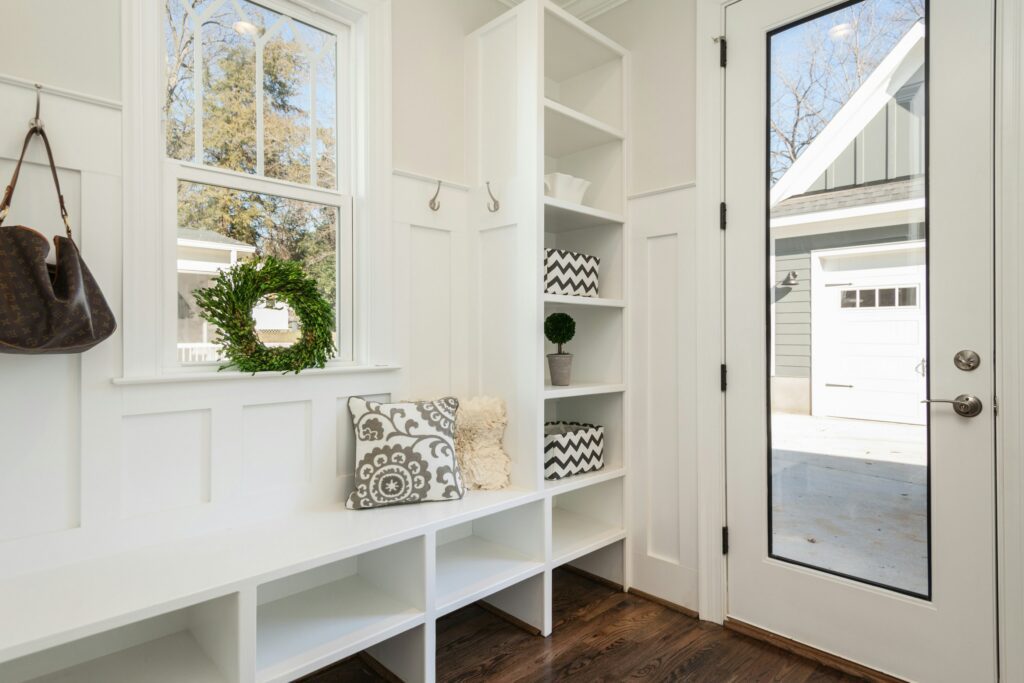
A swept entry, working lights, a clean doormat, visible house numbers, seasonal planters, and a clear place to put shoes or bags can immediately make the house feel cared for.
In the Hudson Valley, where many homes are tied closely to the outdoors, the arrival moment matters. A front porch, mudroom, gravel drive, garden path, or old stone step can be part of the charm.
Just make sure guests can find the door and enter without feeling like they are solving a rural escape room.
Think through parking and arrival
This sounds painfully practical, which means it is useful.
If you live on a narrow road, have a long driveway, share parking, or have a house that is not immediately obvious from the street, give guests clear arrival instructions.
Tell them where to park. Mention if GPS is strange. Warn them if the driveway is steep, dark, gravel, shared, or easier to back into than out of.
If they are arriving at night, turn on exterior lights.
A warm arrival sets the tone.
A confusing arrival makes people walk in already slightly tense, which is not the energy we are going for.
Protect the quiet moments
The best visits are not all activity.
They need pauses.
A slow breakfast. A glass of wine on the deck. Reading in separate corners. A movie. A puzzle. A nap. A fire pit conversation.
A rainy afternoon with coffee and no plan. Everyone doing their own thing without apology.
This is where a Hudson Valley home can really shine.
The setting does some of the work.
A porch, deck, garden, kitchen island, fireplace, pool area, reading nook, or comfortable living room gives people a place to settle in. Guests do not always need to be entertained. Sometimes they just need permission to relax.
Especially if they are coming from the city, the quiet itself may be the luxury.
Let the visit have space.
Set gentle boundaries before you need them
Good hosting does not mean surrendering your entire home, schedule, and nervous system.
A generous weekend can still have boundaries.
If you have work calls, say so. If mornings are slow in your house, let guests know. If pets need a certain routine, explain it. If kids nap, name the schedule. If you are not cooking every meal, make that clear.
You can be warm and direct at the same time.
Try something like:
“We’ll do coffee and breakfast at home Saturday, then I made a lunch reservation in town. Dinner can be easy… either we cook or grab something casual.”
That kind of framing is hospitable without overcommitting.
It also prevents the quiet resentment that can build when a host tries to be charming while mentally calculating how many meals they have accidentally volunteered to produce.
Stock the house strategically
A well-stocked house makes hosting easier.
It does not need to be extravagant.
Think useful, flexible, and low-maintenance:
Good coffee and tea.
Half-and-half or milk options.
Sparkling water.
A few easy breakfast items.
Fruit.
Crackers, cheese, or snacks.
A simple dessert.
Extra paper goods.
A couple of local items, such as cider, farm stand jam, baked goods, or seasonal produce.
The goal is to have enough on hand so the weekend does not require constant errands.
Hudson Valley hosting is especially nice when you can pull something local into the experience without making a production of it.
A loaf from a local bakery. Apples from a farm stand. Flowers from a market. Coffee from a nearby roaster. A bottle of local cider. Those details make the weekend feel rooted.
They also make you look more organized than you may actually be.
Always a win.
Let the home tell part of the story
Your home does not need to be grand to host beautifully.
A small village house can offer walkability, porch conversations, and the ability to stroll to dinner. A country property can offer privacy, birdsong, outdoor meals, and night skies. A renovated older home can share character and comfort. A modern home can offer ease, light, and flow.
The key is to host in a way that suits the home.
If the best part of your house is the deck, plan around that. If it is proximity to town, use that. If it is the kitchen, cook together. If it is the quiet, protect it. If it is the view, give people time to enjoy it.
Do not force a version of hosting that does not fit the property.
The most memorable weekends usually feel natural to the house.
For buyers: think about hosting before you buy
This is also a useful lens during a Hudson Valley home search.
If hosting matters to you, consider it before you fall in love with a property.
Ask yourself:
Where would guests sleep?
Is there a comfortable guest bath?
Can visitors have some privacy?
Is there enough parking?
Can the kitchen handle casual entertaining?
Is there room for people to gather without feeling crowded?
Does the outdoor space support the way you imagine hosting?
Is the home easy enough for aging parents, friends with children, or weekend guests?
How far are you from restaurants, shops, train access, trails, or the places guests will want to visit?
A house does not need a dedicated guest wing to be hospitable. But if regular visitors are part of the dream, the layout should support that dream in real life.
A home that hosts well often has a few practical features: a flexible bedroom, a finished lower level, a den, a comfortable guest bath, an easy kitchen-to-outdoor connection, or a living area where people naturally gather.
Those details may not always be the headline features in a listing, but they can shape how the home feels over time.
For sellers: show the hosting potential
If you are selling a Hudson Valley home, hosting can be part of the lifestyle story.
Buyers are not just evaluating bedrooms and bathrooms. They are imagining Thanksgiving, long weekends, summer visits, friends coming up from the city, coffee on the porch, kids in the yard, parents staying over, dinners outside, and slow Sunday mornings.
Help them see that.
A guest room should feel simple, calm, and functional. Outdoor seating should be clean and intentional. Dining areas should be easy to understand. The entry should feel welcoming. The kitchen should suggest gathering without being crowded. A finished lower level, office, bonus room, or den can be framed as flexible space for guests, work, media, or overflow.
This is where presentation matters.
You are not pretending the home is something it is not. You are helping buyers understand how the home can hold real life.
In the Hudson Valley, that matters because lifestyle is often the reason people are moving here in the first place.
Sample low-effort guest weekend
Here is a simple structure that works well:
Friday evening: Arrival, easy dinner at home or a casual local reservation. No major agenda.
Saturday morning: Coffee at home, then a walk, farmers market, village stroll, or bakery stop.
Saturday afternoon: Downtime at the house. Porch, pool, reading, nap, conversation, whatever the property naturally offers.
Saturday evening: One nice dinner, either at home or out.
Sunday morning: Slow breakfast, optional scenic drive, farm stand stop, or one last local favorite before guests leave.
That is it.
Enough structure to feel hosted. Enough breathing room to feel relaxed.
No clipboards required.
Frequently asked questions
How can I prepare my home for overnight guests?
Start with the essentials: a clean guest room, fresh linens, extra towels, visible outlets or a phone charger, water, the Wi-Fi password, and a little space for luggage or hanging clothes. Make the bathroom easy to use, stock basic toiletries, and clear the entry so guests can arrive without navigating clutter. The goal is not perfection. It is making guests feel expected and comfortable.
What should visitors do in the Hudson Valley?
A good Hudson Valley guest weekend usually includes one or two simple local experiences rather than an overpacked schedule. Consider a village stroll, farmers market, farm stand, river walk, scenic drive, casual hike, local restaurant, bookstore, antique shop, bakery, or coffee stop. The best plan depends on the season, the weather, your town, and your guests’ energy level.
How do I host without overplanning?
Choose one anchor activity per day and leave the rest of the schedule flexible. Give guests options instead of assignments. Build in time at home for slow mornings, porch conversations, reading, cooking, or simply relaxing. The best visits usually have a rhythm, not an itinerary.
What should I keep in a guest room?
A comfortable guest room should include clean sheets, extra blankets, towels, a reading lamp, a place for luggage, a few empty hangers, tissues, water, and easy access to an outlet or charger. A small note with the Wi-Fi password and a few local recommendations is also a thoughtful touch.
What makes a Hudson Valley home good for hosting?
A good hosting home does not need to be large. It needs to function well. Useful features may include a comfortable guest room, flexible sleeping space, easy parking, a welcoming entry, a practical kitchen, a comfortable gathering area, and outdoor space where people can relax. Proximity to villages, restaurants, trails, farms, train access, or scenic drives can also make hosting easier.
A thoughtful next move
A home becomes more meaningful when it can hold other people’s memories.
The friend who visited in October and still talks about the leaves. The family breakfast that stretched into noon. The summer weekend by the pool. The rainy afternoon when no one did much of anything, and somehow that was the best part.
That is the beauty of a Hudson Valley home.
It does not need to perform.
It simply needs to make people feel welcome.
Hosting is less about perfection than giving guests a reason to exhale. A comfortable room, a clear plan, a few local favorites, and enough open space in the weekend can do far more than an overstuffed itinerary.
Explore the Hudson Valley with intention. For a home search shaped around the way you want to live, not just a list of rooms, connect with Jeffrey Hoffmann for a tailored local strategy.